
Our Christmas cookie went to Argentina to become an alfajor!
Do you remember the Christmas cookies we made? Those buttery ones with green icing... We had put some aside, undecorated, and now they will come in handy!
Our new sweet idea came when we were looking for different types of Christmas cookies around the world. As you can imagine, there are many! This time, our interest was piqued by alfajores, Argentinian cookies with a caramel filling. And that's how the idea came to us: we would combine the cookies we had saved with a very original product we recently found at the Honey Exhibition, creamed honey, and make them into sandwiches!

The cookies that inspired us and which we decided to use as a model are called alfajores and originate from Argentina. They are buttery cookies (like ours) with a filling of dulce de leche, a caramel spread much loved in Latin American countries. Sometimes Latin Americans also add grated coconut around the filling.

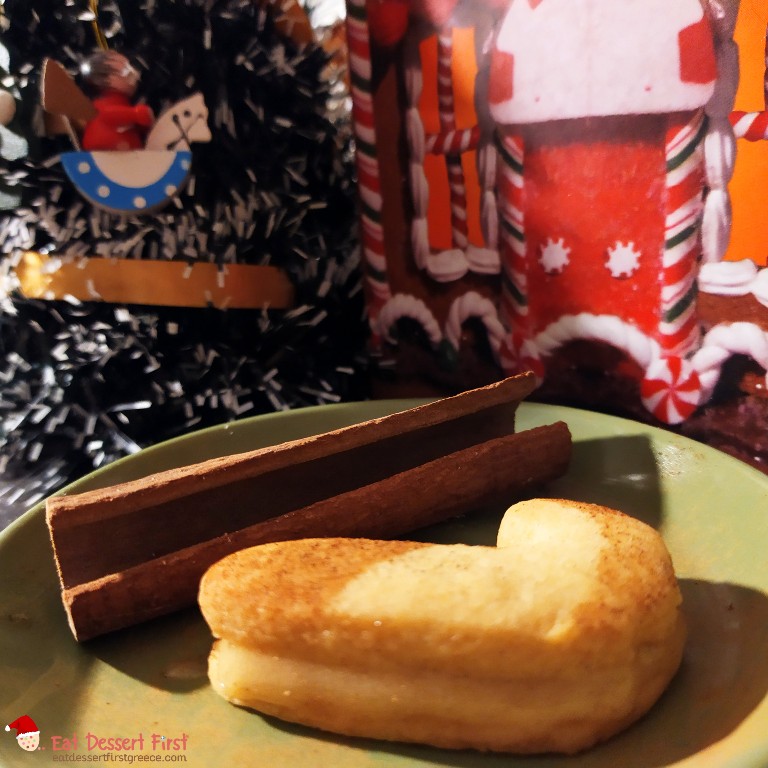
Dulce de leche is essentially a milk caramel, which we can make by boiling a can of condensed milk for three hours in a pot of hot water. However, we can also buy it ready-made, in cans similar to condensed milk.

We really liked the idea of the filled Christmas cookie, so we decided to make our own Greek sandwich cookies... We took our buttery cookies (find the recipe in our article) and instead of caramel, we used Creamed Honey from the company Melisokipos . We also sprinkled a little cinnamon, and the result was a cookie healthier than alfajores and even more festive!

So, with a plate of our delicious Christmas sandwich cookies in hand, we will take a sweet trip to Argentina to learn more about the source of our inspiration. Alfajores are characteristic cookies of Argentina, where they are enjoyed all year round as an accompaniment to coffee or tea. Especially at Christmas, however, it is a tradition for housewives to make homemade alfajores using their family recipe. We will also find them in many other countries, such as Chile, Uruguay, Paraguay, Colombia, Peru, Bolivia, Ecuador, Andorra, Venezuela, Brazil, but also in Europe in Spain and southern France, as well as in the Philippines.
As always, we looked for the history of alfajores, which begins in Spain. In an article by journalist and sommelier Sorrel Moseley-Williams we read that their name has an Arabic root: it comes from the Hispano-Arabic word al-hasú which means filling. They were brought to Argentina in the 16th century by settlers from southern Spain. They also appeared in Peru, where they were consumed by Spanish soldiers. Elsewhere we read that Spanish historians associate alfajores with mamoul, Middle Eastern and North African sweets, made from buttery dough with a date paste filling, sprinkled with powdered sugar.
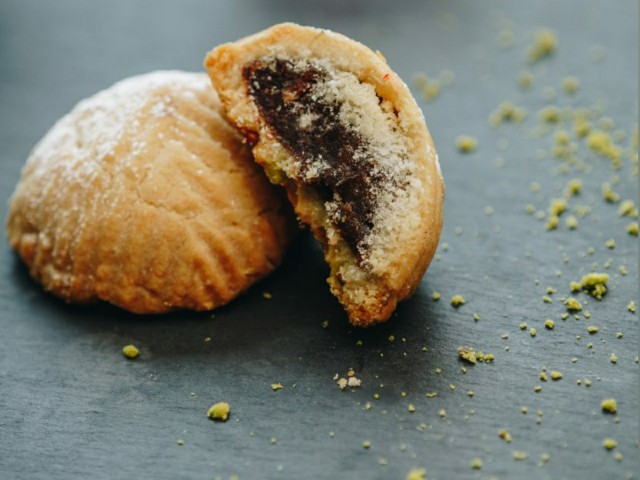
The Spanish sweet called alfajor, of course, was very different from the Latin American one: it had a cylindrical shape and was made with almonds, walnuts and honey, anise and spices. We learned that Spanish alfajores originate from the region of Andalusia and are a traditional Christmas treat to this day. Throughout the year, they can be found in the city of Medina-Sidonia, the place where they were created.

The Argentinians removed the nuts and spices and added the delicious caramel filling, and often a chocolate coating, giving them their own character. They acquired their modern form as we know it during the 19th century. According to Moseley-Williams, in Argentina, the popularity of alfajores skyrocketed in the 1950s, when they began to be mass-produced and packaged.

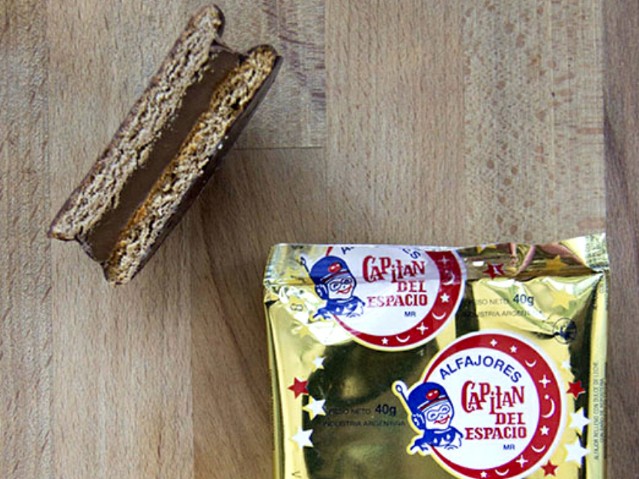

In a New York Times article, the journalist points out that many online recipes for alfajores today are wrong, as they include buttery shortbread cookies… just like ours! She claims the culprit is a box of cornstarch with a recipe printed on its back. The authentic version of these sweets, on the other hand, features cookies with a cake-like texture.
In Peru, a variation called alfajores de miel is made. In this version, the cookies are filled with a syrup called miel de chancaca, which is made with sugar, cinnamon, and orange peel. This syrup is used in Peruvian sweets like sopaipillas (fried pastries) and picarones (a type of doughnut).

Another variation is alfajores de maicena (or maizena). Maicena is cornstarch in Spanish, and this is their difference: the cookie dough is made with cornstarch, resulting in a fluffy and airy cookie.

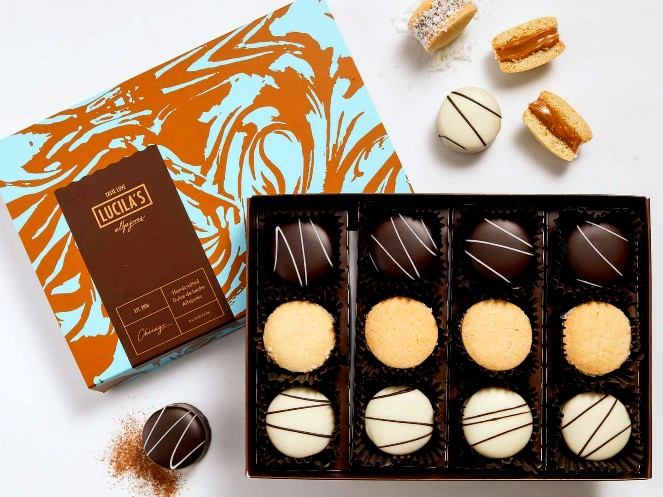
Alfajores are so beloved in Latin American countries that there are specialized cafes dedicated solely to these cookies. Modern confectionery also adores them and offers them in gourmet versions in elegant packaging that rival French macarons!
From mini alfajores, we now move on to something more substantial… In 2010, Uruguay created the world's largest alfajor to celebrate 50 years since the first alfajor was produced in the country, earning them a well-deserved spot in the Guinness World Records. It weighed 464 kilograms – equivalent to 15,000 classic alfajores – and was made in the central square of the city of Minas. To prepare it, we read that it required 60 kg of flour, 2000 egg whites for meringue, 5 kg of honey, and 212 kg of dulce de leche.

It's a good thing we made our own cookies, because a giant alfajor seems a bit difficult for now... Concluding this mental journey to distant lands, we would like to wish you happy sweet preparations for the upcoming holidays and may our sweet stories inspire your own unique creations!
Finally, we sincerely thank the company Melissokipos for the products they provided to support our preparations.
